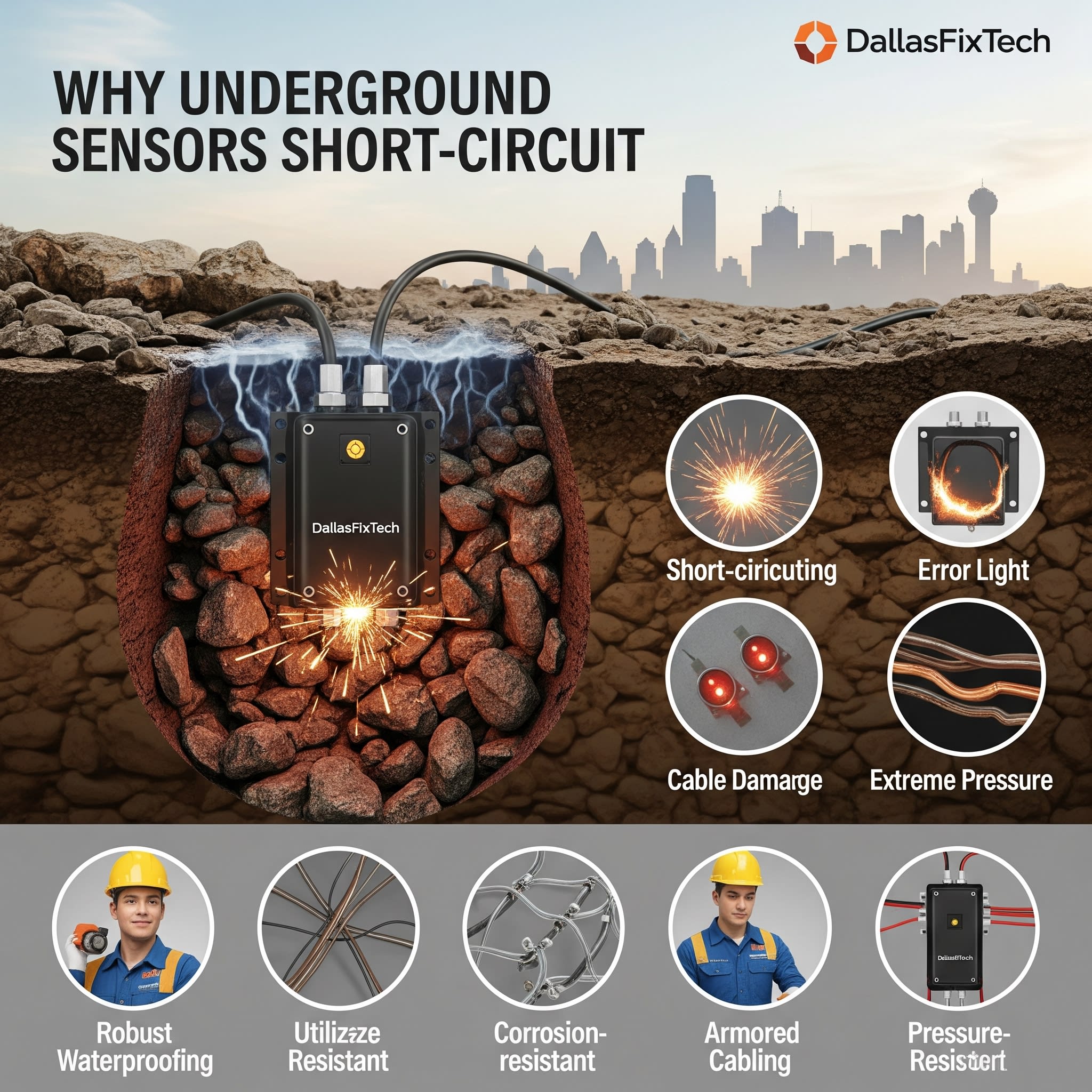
Why Underground Sensors Short-Circuit and How to Protect Them: DallasFixTech’s Guide in Dallas, TX
**Underground sensors** are critical for a wide array of applications, from monitoring soil conditions in agriculture and detecting seismic activity to tracking utility infrastructure and optimizing mining operations. These devices provide invaluable data from hidden environments. However, the subterranean world presents a uniquely harsh and challenging environment for electronics, making them highly susceptible to **short circuits and premature failure**. Factors like constant moisture, corrosive soil chemicals, and physical pressure can quickly compromise sensor integrity. For organizations relying on underground sensor systems in Dallas, TX, **DallasFixTech** offers expert insights. We explain common causes of short circuits in underground sensors and how to prevent sensor failure, recommending robust solutions like **waterproof encapsulation, corrosion-resistant materials, and stress-relief designs** to extend sensor life and reliability for critical monitoring applications.
Common Causes of Short Circuits in Underground Sensors (DallasFixTech Diagnosis)
The underground environment presents significant threats to electronic components:
- Water Penetration (Moisture Ingress) into Sensor Electronics: The most prevalent cause. Even tiny cracks or compromised seals in the sensor's housing can allow water to seep in. Once inside, water conducts electricity, causing immediate short circuits and irreversible damage to sensitive electronic components.
- Corrosive Effects of Soil Acidity/Chemicals: Soil contains various chemicals and can be acidic or alkaline. These chemicals, combined with moisture, can rapidly corrode metal contacts, solder joints, and circuit board traces, leading to electrical shorts and component degradation.
- Mechanical Damage from Ground Movement: Soil expansion/contraction (e.g., due to freezing/thawing, moisture changes), root growth, or shifting earth can exert significant mechanical stress on sensors and their cables, causing cracks in housings, fractured PCBs, or damaged wiring that lead to short circuits.
- Poor Cable Sealing & Routing: Inadequate sealing where cables enter the sensor housing, or improper cable routing (e.g., cables buried without protection, sharp bends), can allow water ingress or expose wires to damage.
- Lightning Strikes/Surges (Indirect): Nearby lightning strikes can induce electrical surges in the ground, potentially damaging unprotected buried sensors.
- Manufacturing Defects: Imperfections in the sensor's sealing or component assembly.
DallasFixTech’s Protection Strategies to Prevent Sensor Failure
Ensuring sensor longevity underground requires a focus on robust design and materials:
- Apply Waterproof and Corrosion-Resistant Coatings/Encapsulation: All internal sensor electronics should be fully **waterproof encapsulated** (e.g., potted in epoxy resin) or coated with durable, flexible, and chemically inert conformal coatings to prevent any moisture or chemical contact.
- Use Durable Materials Designed for Underground Use: Select sensor housings made from robust, corrosion-resistant plastics (e.g., high-grade PVC, ABS), ceramics, or marine-grade stainless steel. Ensure all external connectors are IP-rated (e.g., IP68 for continuous immersion).
- Incorporate Mechanical Stress Relief in Sensor Mounting: Design sensor mounting and cable entry points to dissipate mechanical stresses from ground movement or cable tension. Use flexible conduits and strain reliefs for cables.
- Proper Cable Selection & Routing: Use direct-burial rated, waterproof, and rodent-resistant cables. Ensure cables are routed to minimize sharp bends or areas where water can collect. Use waterproof junction boxes.
- Lightning Protection: For susceptible areas, incorporate surge protection devices (SPDs) for buried cables or grounding systems.
- Regular Monitoring & Diagnostics: Implement systems to continuously monitor sensor health and signal integrity. Look for early signs of erratic behavior that might indicate impending failure.
- Firmware Updates: Ensure any smart sensors have the latest firmware, which might include improved power management or diagnostic features.
Mining Sensor Expertise in Dallas, TX: Ensure Your Underground Sensor Systems Last!
The reliability of underground sensors is paramount for continuous data collection in challenging environments. **DallasFixTech** recommends waterproof encapsulation, corrosion-resistant materials, and stress-relief designs. **Contact DallasFixTech** today for professional sensor protection, repair, and comprehensive mining sensor expertise in Dallas, TX. Ensure your underground sensor systems last longer and provide reliable data for your critical operations!


