Why Desalination Plant Sensors Clog and How to Maintain Their Performance: DallasFixTech’s Solutions in Dallas, TX
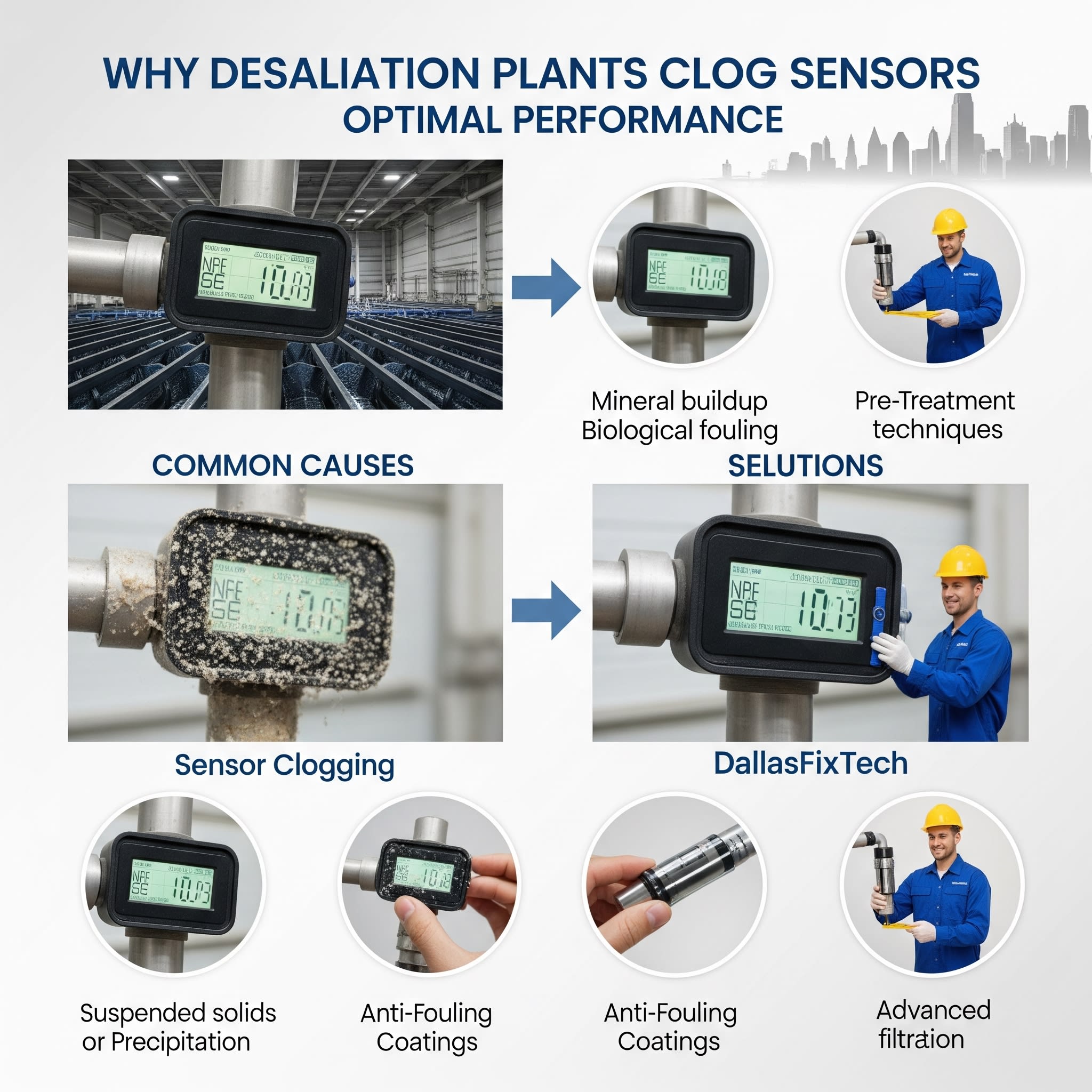
**Desalination plants** are vital infrastructure, converting saltwater into fresh, potable water—a critical process for water-stressed regions, including potentially for future water needs in Dallas, TX. These complex facilities rely on a vast network of precision sensors to monitor water quality, pressure, flow rates, and membrane performance at every stage of the process. However, the harsh and chemically active environment of desalination—rich in salts, minerals, and microorganisms—causes a significant operational challenge: **sensor clogging**. This clogging, primarily due to mineral deposits and biofouling, can drastically affect sensor accuracy, lead to false readings, compromise process control, and result in costly downtime. At **DallasFixTech**, we specialize in industrial sensor technologies. We explain common causes of sensor clogging in desalination plants and highlight effective cleaning schedules, anti-fouling coatings, and self-cleaning sensor technologies to keep your desalination process smooth, reliable, and operating at peak efficiency.
Common Causes of Sensor Clogging in Desalination Plants (DallasFixTech Diagnosis)
The unique nature of seawater and the desalination process contribute to clogging:
- Calcium and Mineral Scale Buildup (Fouling): As seawater is processed, mineral salts (especially calcium carbonate, magnesium hydroxide) can precipitate and accumulate on sensor surfaces, forming hard scale layers that obstruct readings.
- Biofilm Formation (Biofouling): Microorganisms (bacteria, algae) present in seawater can attach to sensor surfaces and grow into slimy biofilms. This biological fouling can rapidly obscure sensors and impact their accuracy.
- Particulate Matter Accumulation: Suspended solids, sand, silt, and other particulate matter in the feedwater can settle on or adhere to sensor surfaces, leading to blockages.
- Chemical Interactions: Certain chemicals used in pretreatment or cleaning processes can react with sensor materials, leaving residues or degrading the sensor.
- Probe Design: Some sensor probe designs are more susceptible to clogging than others, particularly those with narrow openings or crevices.
- Lack of Regular Cleaning: Insufficient or infrequent cleaning protocols allow buildup to become severe.
DallasFixTech’s Maintenance Strategies for Optimal Sensor Performance
Proactive cleaning and smart sensor selection are crucial for desalination efficiency:
- Implement Regular Cleaning and Descaling Routines: Establish and strictly adhere to a rigorous schedule for manual or automated cleaning of all sensors. Use appropriate descaling agents (acids) and biocides to remove mineral scale and biofilms effectively.
- Use Anti-Fouling Surface Treatments and Coatings: Apply specialized anti-fouling coatings (e.g., hydrophobic, superhydrophobic, or silver-ion-infused surfaces) to sensor probes. These coatings make it difficult for minerals and microorganisms to adhere, reducing buildup.
- Adopt Sensors with Self-Cleaning Capabilities: Invest in advanced sensors designed with built-in self-cleaning mechanisms. These can include:
- **Mechanical Wipers:** Physical wipers that periodically clean the sensor surface.
- **Ultrasonic Cleaners:** Emit high-frequency sound waves to dislodge buildup.
- **Jet Cleaners:** Use bursts of water or air to clear contaminants.
- **Automated Chemical Dosing:** Systems that automatically apply cleaning solutions.
- Pre-Filtration Optimization: Ensure the raw seawater undergoes effective pre-filtration to remove as many particulates and microorganisms as possible before reaching sensitive sensors.
- Optimize Sensor Placement: Strategically position sensors in locations within the process stream that minimize direct exposure to high concentrations of foulants, while still providing accurate readings.
- Regular Calibration: Even with anti-fouling measures, regular sensor calibration is essential to compensate for any minor drift or buildup.
- Monitor Data Trends: Implement data analytics to monitor sensor readings for sudden drops or gradual drifts that might indicate clogging or fouling.
Ocean Tech Expertise in Dallas, TX: Maintain Desalination Efficiency!
Accurate sensor data is critical for the efficient and reliable operation of desalination plants. **DallasFixTech** highlights cleaning schedules, anti-fouling coatings, and self-cleaning sensor technologies to keep your desalination process smooth and reliable. **Contact DallasFixTech** today for professional sensor upkeep, maintenance, and expert ocean tech consulting in Dallas, TX. Maintain desalination efficiency and ensure a consistent supply of clean water!


